Part of the Accessible Essentials Initiative program
Post-Harvest Storage Monitoring
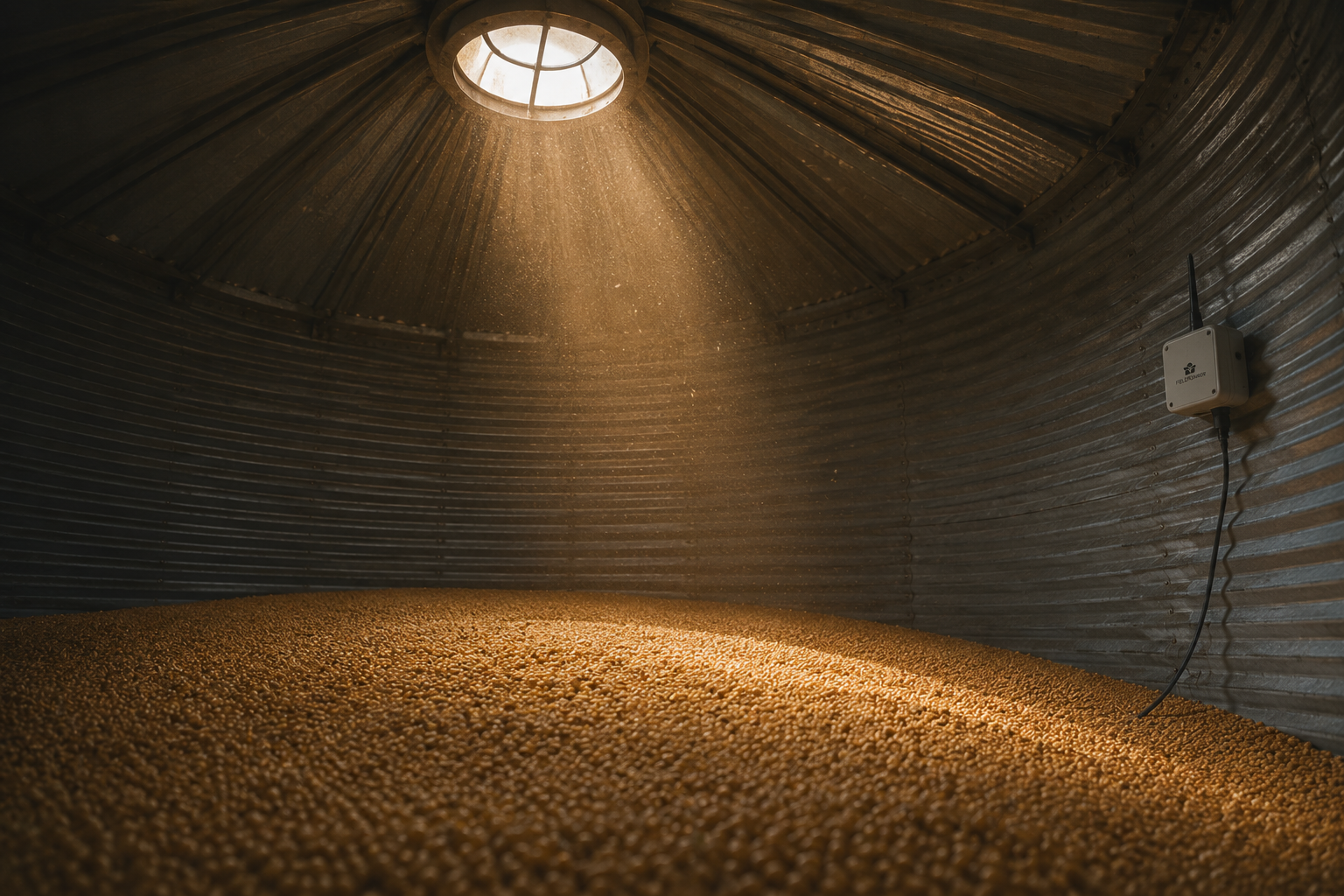
Affordable spoilage-risk monitoring for on-farm cold storage, root cellars, and grain bins, extending the same sensor platform to prevent loss after harvest.
Published July 22, 2026·Last revised July 24, 2026
Mission Alignment
In the United States, an estimated 30 to 40 percent of the food supply is wasted, and loss at the farm and storage level is a meaningful contributor for small farms specifically. Preventing even a modest share of that loss is a food-security gain without growing a single additional calorie — and it reuses the same sensor hardware built for field monitoring rather than requiring a whole new platform.
Problem Statement
Small farms with on-site cold storage, root cellars, or grain bins mostly lack affordable monitoring for temperature, humidity, spoilage-risk atmosphere, and power-outage detection. Loss from spoilage, pests, or improper storage conditions is common and often invisible until the damage is already done.
Scope Boundary
In Scope
- Storage-environment sensor nodes — an indoor, enclosed variant of the field sensor hardware
- Power-outage and backup-battery alerting
- Spoilage-risk alert logic layered onto the shared data platform
Out of Scope
- The core field sensor hardware and data platform themselves — this solution is primarily a new application of the existing shared base, plus a few storage-specific sensors and alert rules
Product Components
Storage Sensor Node
- Reuses the field sensor node's core electronics in an indoor-rated variant
- Adds CO2 sensing for modified-atmosphere spoilage risk in enclosed storage
- Adds power-loss detection with battery backup so an outage triggers an alert rather than going unnoticed
Alert Logic
- Threshold- and duration-based spoilage risk scoring specific to storage type — grain bin moisture and heat versus cold-storage temperature excursion
Phased Milestones
- Identify one or two pilot storage use cases with a co-operator farm, based on what that farm actually has on site
- Adapt the field sensor node for indoor, enclosed use and add CO2 and power-loss sensing
- Build spoilage-risk alert rules validated against known agronomic and food-safety thresholds
- Field pilot across one full storage season, measuring any prevented loss event
Open Research Questions
- What documented temperature, humidity, and CO2 thresholds and timeframes predict spoilage or mycotoxin risk for common small-farm storage types, and what do USDA and extension literature say about them?
- What is the real magnitude of preventable farm-level post-harvest loss for small and regenerative farms specifically, as opposed to global aggregate food-waste statistics?
Success Metrics
- At least one documented prevented-loss event during a pilot season, directly attributable to an alert from the system
- The large majority of storage-node hardware reused directly from the field sensor platform, validating the shared-hardware strategy
Revision History
| Date | Changes |
|---|---|
| July 24, 2026 | First published |
Discussion